For Architects & Builders
Integrating Bowling Lanes Into Residential Projects
Technical specifications, spatial requirements, and coordination guidance for design professionals working on private bowling installations.
The Opportunity
Why Bowling Lanes in Residential Projects
Modern residential bowling systems bear little resemblance to the noisy, power-hungry commercial centres many people remember. String pinsetter technology, improved materials and software integration have made today's installations quieter, more energy efficient and far easier to maintain. What was once commercial infrastructure is now a refined inclusion suited to private homes.
Like a chef's kitchen anchors the home of a serious cook, a bowling lane anchors the home of someone who truly enjoys entertaining.
Technical
Space & Structural Requirements
Tenpin
- Lane: ~18m foul line to head pin
- Approach: ~4.8m
- Machine room: ~3m
- Total length: ~25.8m
- Width (2 lanes): ~3.7m
- Ball type: Traditional (varied weights)
Ninepin
- Lane: ~19.4m
- Approach: ~5.5m
- Machine room: ~3m
- Total length: ~27.9m
- Width (2 lanes): ~3.7m
- Ball type: Same weight, no holes (~2.8kg)
KERN
- Lane: ~12m
- Approach: ~3.5m
- Machine room: ~2.5m
- Total length: ~18m
- Width (2 lanes): ~3.7m
- Ball type: Kern Balls (same weight)
All formats: Minimum ceiling clearance 2.1m above lane surface. ~420mm below lane for mechanical systems. Slab set-down during construction is the ideal approach.
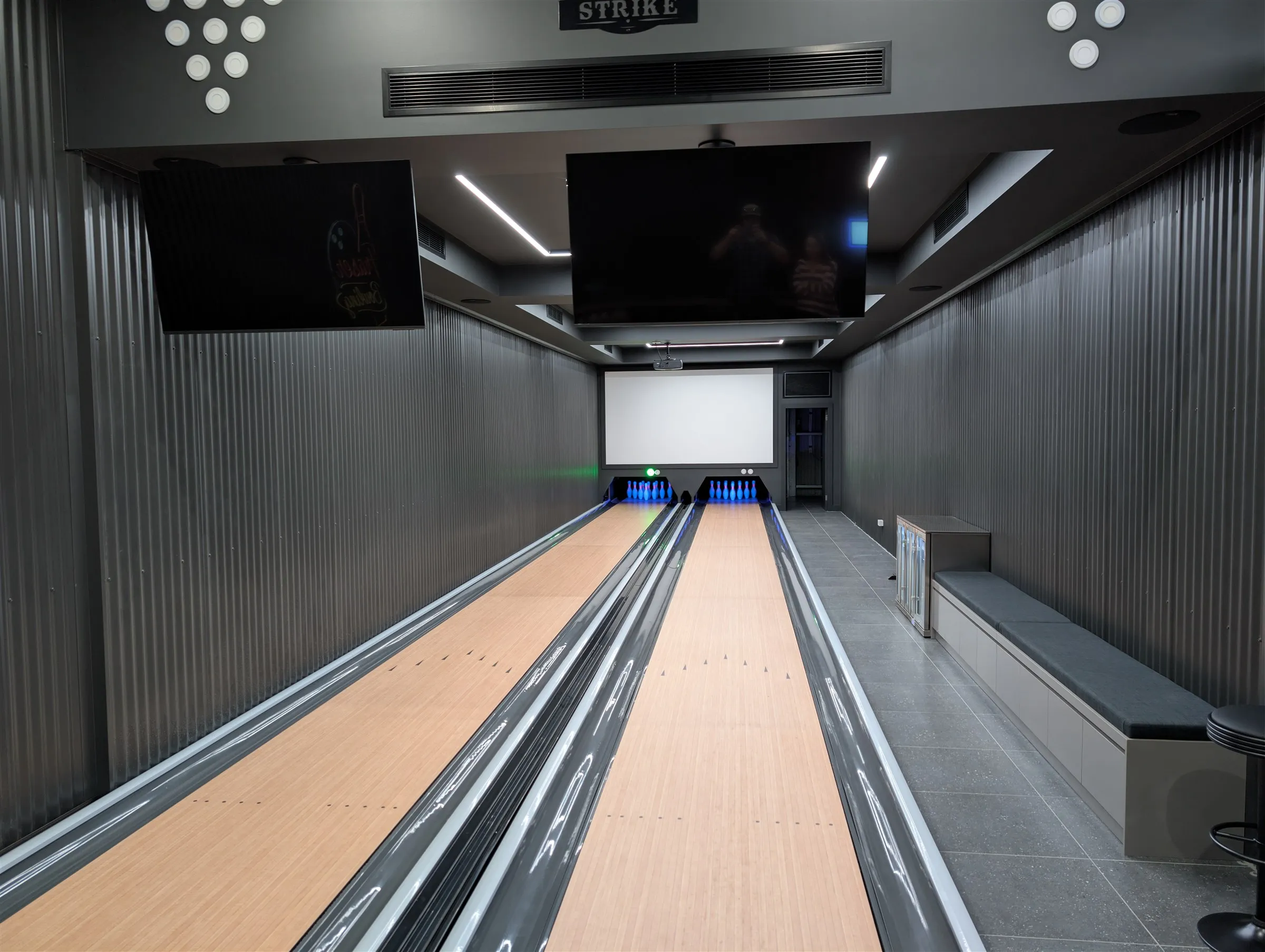
By transitioning to KERN™ Balls (lighter and more compact than traditional Tenpin balls), the required lane length can be reduced significantly. A 12-metre lane combined with a 3.5-metre approach and machine area retains challenge and enjoyment while dramatically improving feasibility within residential footprints. That reduction alone often determines whether a project proceeds or is dismissed early. For a quick feasibility check against a specific room, the lane planner generates a dimensioned layout from your measurements, downloadable as SVG or DXF.
A slab set-down incorporated during construction allows the lane to sit flush with surrounding finishes, maintaining clean architectural lines and enabling the approach to integrate with adjacent bar, lounge or games areas rather than appearing as an isolated feature.
From a structural perspective, the heaviest individual component (the pinsetter) weighs approximately 300 kilograms and is concentrated within the machine room. Standard residential concrete slabs typically accommodate this comfortably. Installations on upper levels require engineering verification, but loads are modest compared to stone features, spas or large aquariums.
Performance
Energy & Practicality
Modern string pinsetters activate only during pin resets and consume minimal energy outside of active play. The efficiency gains are substantial and one of the key reasons residential installations are now genuinely practical.
For noise management, every lane is fully isolated on rubber to minimise vibration transfer through the structure. Where bumpers are fitted, electric actuators replace pneumatic ones, removing the need for a compressor. Balls and pins still produce impact noise, but the mechanical systems are quiet enough for residential use. Basic acoustic treatment in shared walls is usually sufficient where the bowling space sits next to living areas.
High-pressure laminate lane surfaces eliminate the sanding, oiling and refinishing associated with traditional timber lanes. Maintenance is reduced to periodic cleaning and annual mechanical servicing.
Process
Planning & Coordination
1. Early Design Engagement
Slab set-downs, structural allowances, electrical circuits, data runs and AV integration incorporated at drawing stage. We work directly with your design team.
2. Equipment Manufacturing
Equipment is manufactured to order in Germany. Typical lead times are approximately three months including shipping. We coordinate timing with your construction schedule.
3. Installation
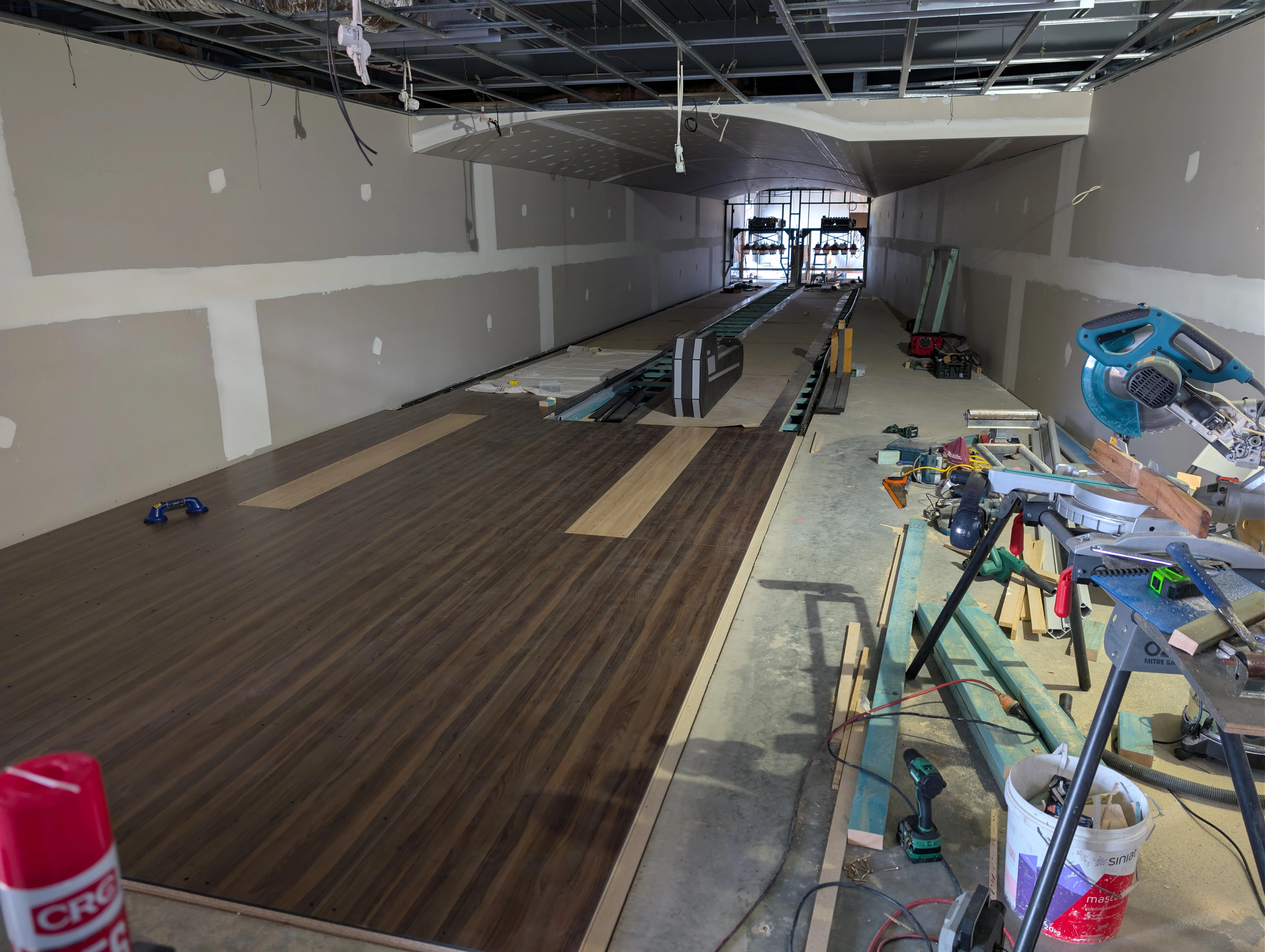
Scheduled late in the construction timeline, before final flooring. HVAC should be operational before installation for temperature and humidity stability. Installation takes approximately three weeks including commissioning, calibration, and servicing.
4. Software & Handover
LaneCraft software is configured with custom visual themes, home automation integration, and access to 16+ game modes. System is fully tested before handover with ongoing software updates and support.
Software
Software as Part of the Architecture
LaneCraft's software supports custom visual themes, home automation integration, and 16+ game formats suited to private entertainment. The interface reflects the aesthetic of the home, not a commercial centre. Custom formats can be developed for different audiences and occasions.
The software is continuously updated with new game modes, so the installation improves over time. For homeowners evaluating long-term value, this is a key differentiator.
Partnership
One Team, One Point of Contact
LaneCraft handles everything: the software, the lane design, the German-manufactured hardware, the installation, and the ongoing support. One team, one point of contact. No separate software vendor, no third-party installer, no ambiguity about who is responsible when something needs attention.
Bowling lanes are mechanical systems and require periodic servicing. Strong after-sales support and local technical expertise are essential. LaneCraft provides Australian-based support, software updates, and maintenance guidance for the life of the installation.
Pricing
Indicative Investment
As a general guide, single-lane systems start from $92,000 and double-lane systems from $139,500. That puts a bowling lane alongside a high-end home theatre or a modest swimming pool. Ongoing costs are typically lower than a pool, especially with modern string pinsetters.
For space and structural planning, our residential bowling lane guide covers what your client needs to know.
Common Questions
Frequently Asked Questions
What are the space requirements for a residential bowling lane? +
A pair of regulation Tenpin lanes requires approximately 25.8 metres in length and 3.7 metres in width. By using Kern Balls, total length can be reduced to approximately 18 metres. A compact 12-metre lane with 3.5-metre approach retains challenge while fitting residential footprints. Minimum ceiling clearance of 2.1 metres above the lane surface is required, plus approximately 420mm beneath the lane for mechanical components.
What are the structural requirements for a home bowling lane? +
The heaviest component is the pinsetter at approximately 300kg, concentrated in the machine room. Standard residential concrete slabs typically accommodate this. A slab set-down incorporated during construction allows the lane to sit flush with surrounding finishes. Upper-level installations require engineering verification but loads are modest compared to stone features, spas, or large aquariums.
When should a bowling lane specialist be engaged in the design process? +
Ideally during early design development. Slab set-downs, structural allowances, electrical circuits, data runs, and AV integration should be incorporated at drawing stage to avoid retrofitting. Equipment is manufactured to order in Germany with approximately 3-month lead times. Installation is typically scheduled late in the construction timeline, before final flooring, with HVAC operational.
How much power does a residential bowling lane use? +
Each lane operates via a 400-watt motor. A two-lane system draws less power when running than a standard electric kettle. Modern string pinsetters activate only during pin resets and consume minimal energy outside of active play.
Project in planning or early design?
A feasibility discussion can clarify spatial requirements, budget expectations and integration pathways. The earlier we are involved, the cleaner the result.
Start a Feasibility Discussion →