How to Build a Home Bowling Lane
Planning a home bowling lane? A practical guide to the space, structure, noise, energy, and formats involved, and what to expect from design through installation.
We get asked the same questions by almost every homeowner who contacts us. How much space do I need? What does the build involve? How loud is it? Can I put one in my shed? How much does it cost to run?
This guide puts everything in one place. We have covered a lot of this across our service pages and project case studies, but here it is as a single reference. If you are at the early thinking stage, this is the article to read first.
Space: How Much Do You Actually Need?
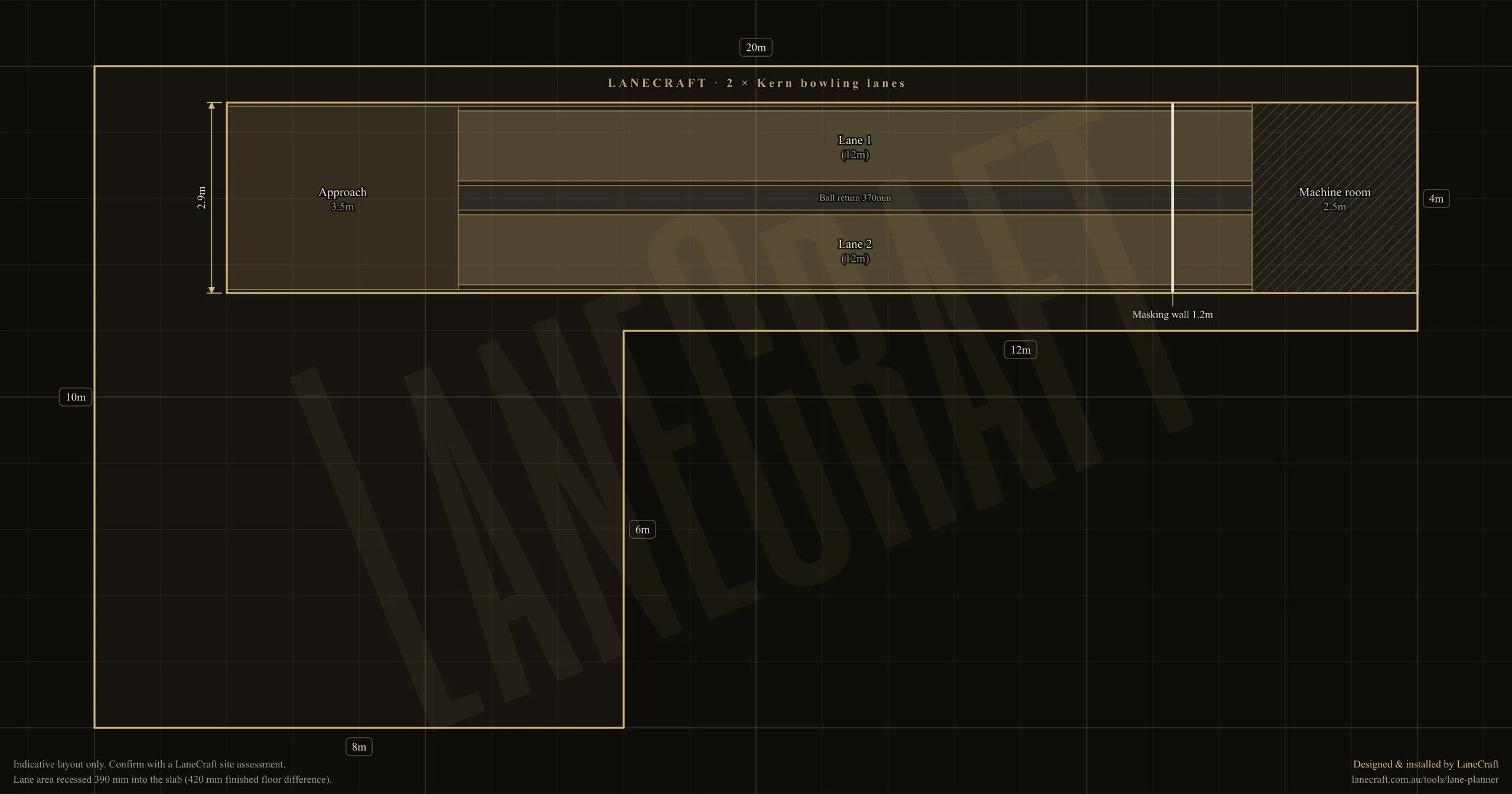
A bowling installation has three parts: the approach (where you stand and release), the lane deck (the playing surface), and the machine room (where the pinsetter lives). The total length depends on which format you choose.
Full-length Tenpin needs roughly 25.8 metres total (18m lane, 4.8m approach, 3m machine room). For two lanes side by side, allow 3.7 metres of width.
Ninepin is the longest format at roughly 27.9 metres total (19.4m lane, 5.5m approach, 3m machine room).
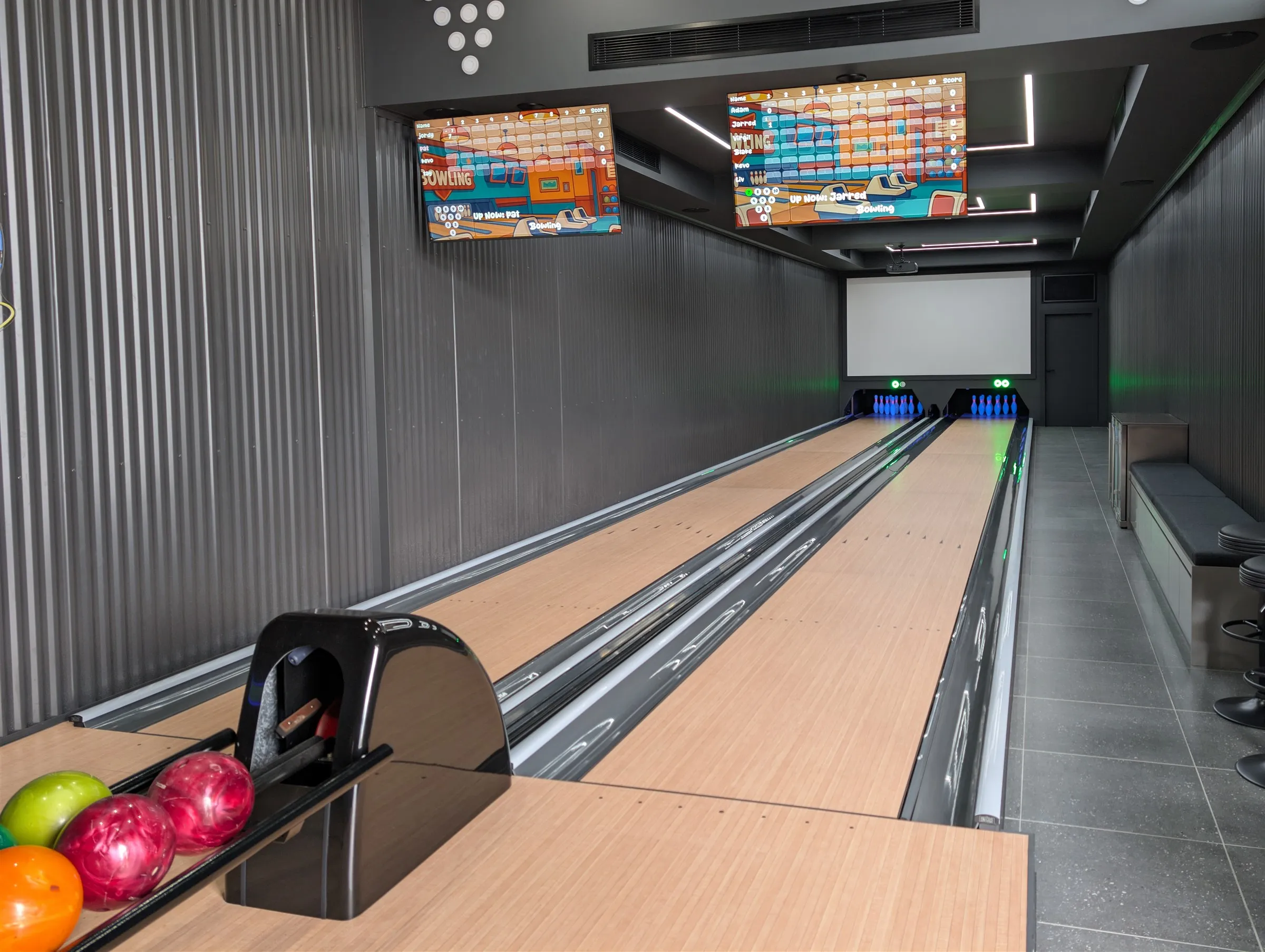
KERN (our compact format) drops to approximately 18 metres total (12m lane, 3.5m approach, 2.5m machine room). This is the format that makes most residential projects viable. It combines the best of Tenpin and Ninepin: a Tenpin pin arrangement with lightweight, same-weight Kern Balls and no gutters.
You need at least 2.1 metres of ceiling clearance above the lane surface, plus approximately 420mm beneath the lane for mechanical components. The cleanest approach is a slab set-down built into the foundation during construction, so the lane sits flush with surrounding flooring.
For detailed dimensions and structural specs, see our architects and builders guide.
Where People Install Them
Every property is different, but these are the most common setups we see:
Entertainment areas in new builds. This is the most common scenario and the ideal one. The bowling lane typically sits alongside a bar, cinema, or games area as part of a larger entertainment wing. Because the space is designed from scratch, slab set-downs, electrical circuits, and ceiling heights are all planned at drawing stage. Most of our residential installations are in new homes where the bowling lane is part of the broader entertaining space, not an isolated room.
Retrofits into existing spaces. We regularly install into existing structures: basements, garages, spare rooms, and outbuildings. The space needs to meet the minimum dimensions and ceiling height, but we have experience working within the constraints of buildings that were not originally designed for bowling.
Basements. Ceiling height is the main constraint. If you have 2.5 metres or more of clear height beneath the floor joists, a basement installation is usually feasible. Moisture management matters here too.
Purpose-built sheds. An option for properties with outdoor space. The building can be designed around the lanes, and the physical separation from the main house means noise is never an issue.
Converted garages. If the dimensions work, a garage conversion can be cost-effective since the slab and roof already exist. Length is usually the limiting factor.
Structure: What Does the Building Need?
The heaviest single component is the pinsetter, at approximately 300 kilograms. It sits in the machine room at the far end of the lane. Standard residential concrete slabs handle this comfortably. Upper-level installations need engineering verification, but the loads are modest compared to stone benchtops, spas, or large aquariums.
The key structural considerations are:
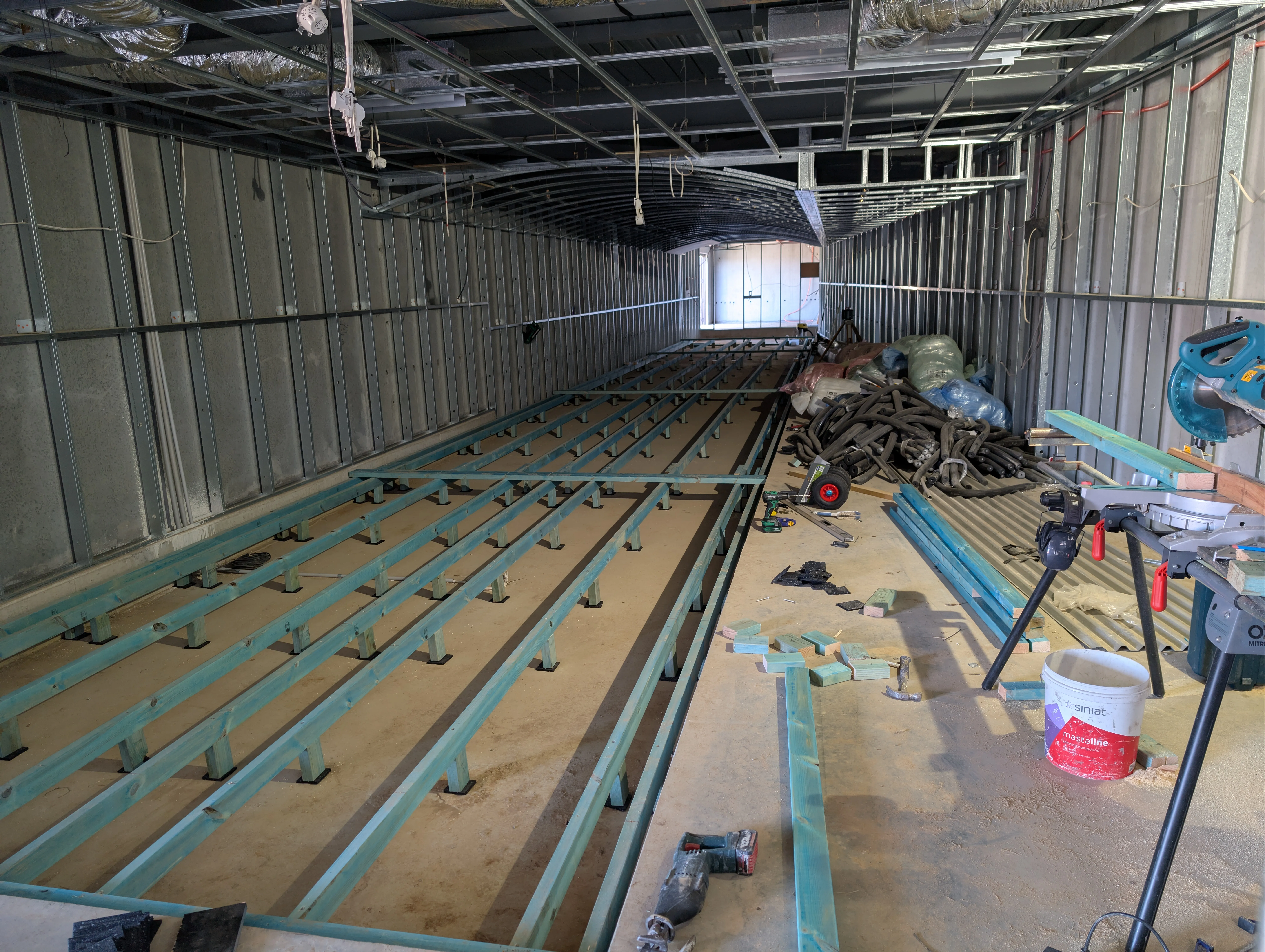
- Slab set-down: approximately 420mm below the finished lane surface for mechanical systems. Best incorporated during construction.
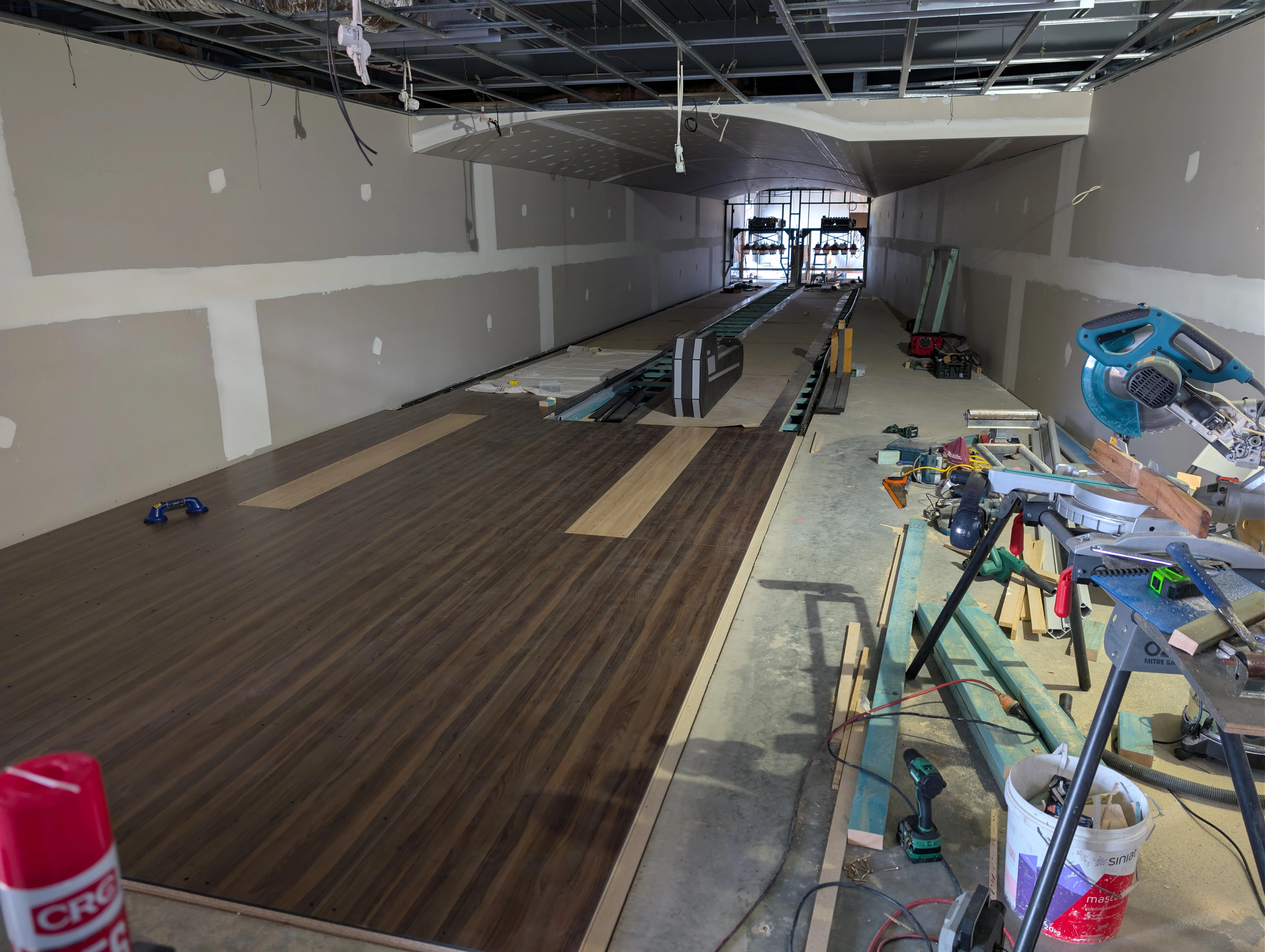
- Level floor: the lane surface needs to be precisely level across its full length. Timber subfloor joists are laid to achieve this.
- Electrical: dedicated circuits for the lane motors (~400W per lane), scoring consoles, and any lighting.
- Data: network connections for the scoring system and any home automation integration.
- HVAC: the bowling space needs climate control. HVAC should be operational before installation begins for temperature and humidity stability.
If you are building new, the time to involve us is at drawing stage. Changes at that point cost nothing. Changes after a slab is poured are expensive.
Noise: What Does It Actually Sound Like?
This is the question that worries people most, and the answer is more nuanced than “it is quiet.”
The pinsetters themselves are quiet. The motor only activates during pin resets and draws approximately 400 watts. Between resets, there is no noise from the mechanical systems at all.
But bowling makes noise. Balls rolling down the lane, pins falling, the impact of a strike. These are the sounds of the game, and they are part of the experience. You would not want a silent bowling lane.
What we can control is how much of that sound transfers into the rest of the house:
- Rubber isolation: every LaneCraft lane is installed fully isolated on rubber to minimise vibration and noise transfer through the structure.
- Electric bumper actuators: where bumpers are fitted, we use electric actuators rather than pneumatic. No compressor, no pneumatic noise.
- Acoustic treatment: if the bowling space shares walls with living areas, basic insulation in the shared walls is usually sufficient.
- Shed installations: if the bowling space is a separate building, noise transfer to the main house is essentially zero.
The practical reality: a bowling lane in a dedicated room or shed is comparable to having a games room. You can hear it if you are standing outside the door, but it does not disturb the rest of the house with basic treatment in place.
Energy and Running Costs
This surprises most people. A two-lane system draws less power when running than a standard electric kettle (approximately 400W per lane motor). Pinsetters only activate during pin resets, so energy consumption outside active play is minimal.
Lane surfaces are high-pressure laminate: no sanding, no oiling, no refinishing. Maintenance is periodic cleaning and an annual mechanical service.
There are no consumables to buy (no chemicals like a pool, no heating costs, no seasonal maintenance). Ongoing costs are typically lower than maintaining a swimming pool.
Lane Formats: Tenpin, Ninepin, or KERN?
We install three formats, and the right choice depends on your space and how you want to use the lane.
Tenpin is the format most Australians know. Full-length regulation lanes with traditional Tenpin balls in varying weights. Needs the most space (25.8m total) and requires bowling shoes. Best for dedicated bowling enthusiasts with a large property.
Ninepin is the European format with a diamond pin arrangement, smaller balls (all the same weight, no holes), and a longer lane (27.9m total). The solid plastic pins are quieter than Tenpin pins. The diamond layout enables the widest variety of game modes. Best for bowlers who want something different and have the space.
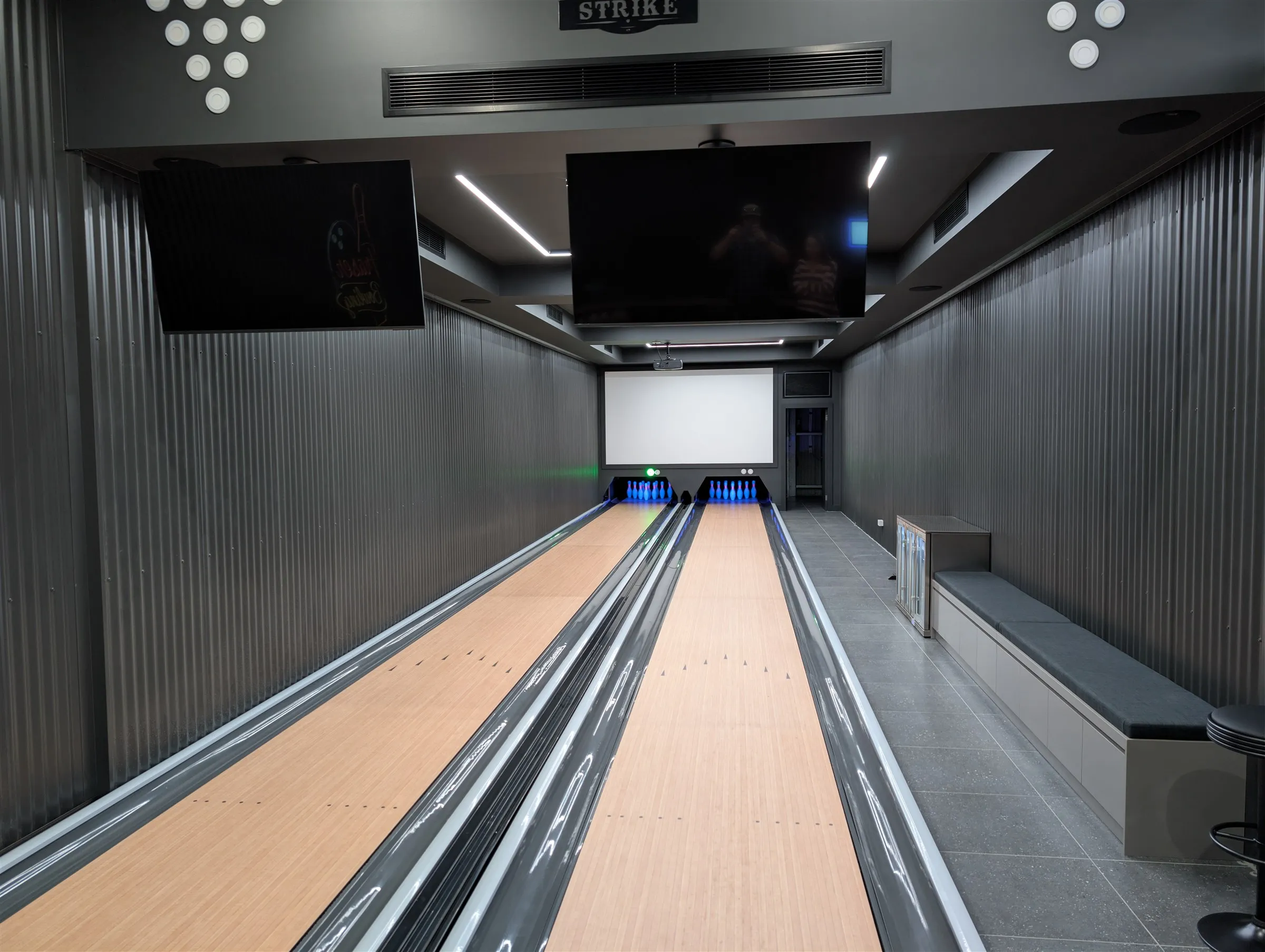
Kern is our compact format that combines elements of both. Tenpin pin arrangement, lightweight same-weight Kern Balls, no gutters, and a compact 18m total footprint. No bowling shoes required. Best for most residential installations because it fits more spaces and is accessible to everyone from day one.
Most homeowners choose Kern. It is a compact game that still feels big, and the accessibility means the whole family actually uses it.
For a detailed comparison of all three formats, see our installation page.
Software: Why It Matters More Than You Think
The software is what keeps a bowling lane interesting beyond the first few months. Without it, every game is the same game. With it, the lane is a platform that keeps evolving.
LaneCraft’s software currently includes 15+ game modes with 65+ more in development. Every game has its own scoring engine and win conditions: racing games where your pin count sets your speed, elimination rounds where you have to hit rising targets, hidden target games, precision challenges, and party formats that need no explanation.
The software controls the pinsetters at the individual pin level, meaning any pin arrangement can be set on the deck. This is what enables games like Wings (only the wing pins are set), Stina (three pins in a centre line), and Canadian Duck (an approximated duckpin layout).
New game modes arrive through regular updates, so a lane installed today will have games next year that do not exist yet. We cover this in depth in our article on why bowling software matters more than the lane.
The Build Process
Every residential project follows the same general process:
1. Consultation and space assessment. We visit your property or review plans for a new build. We take measurements, discuss lane format and finishes, and work out what is feasible. If there is an architect or builder involved, we coordinate with them from this stage.
2. Design and fabrication. Lane surface, finishes, and software are specified to your requirements. Pinsetters are manufactured to order in Germany with a lead time of approximately three months. Lane components and software are prepared in parallel.
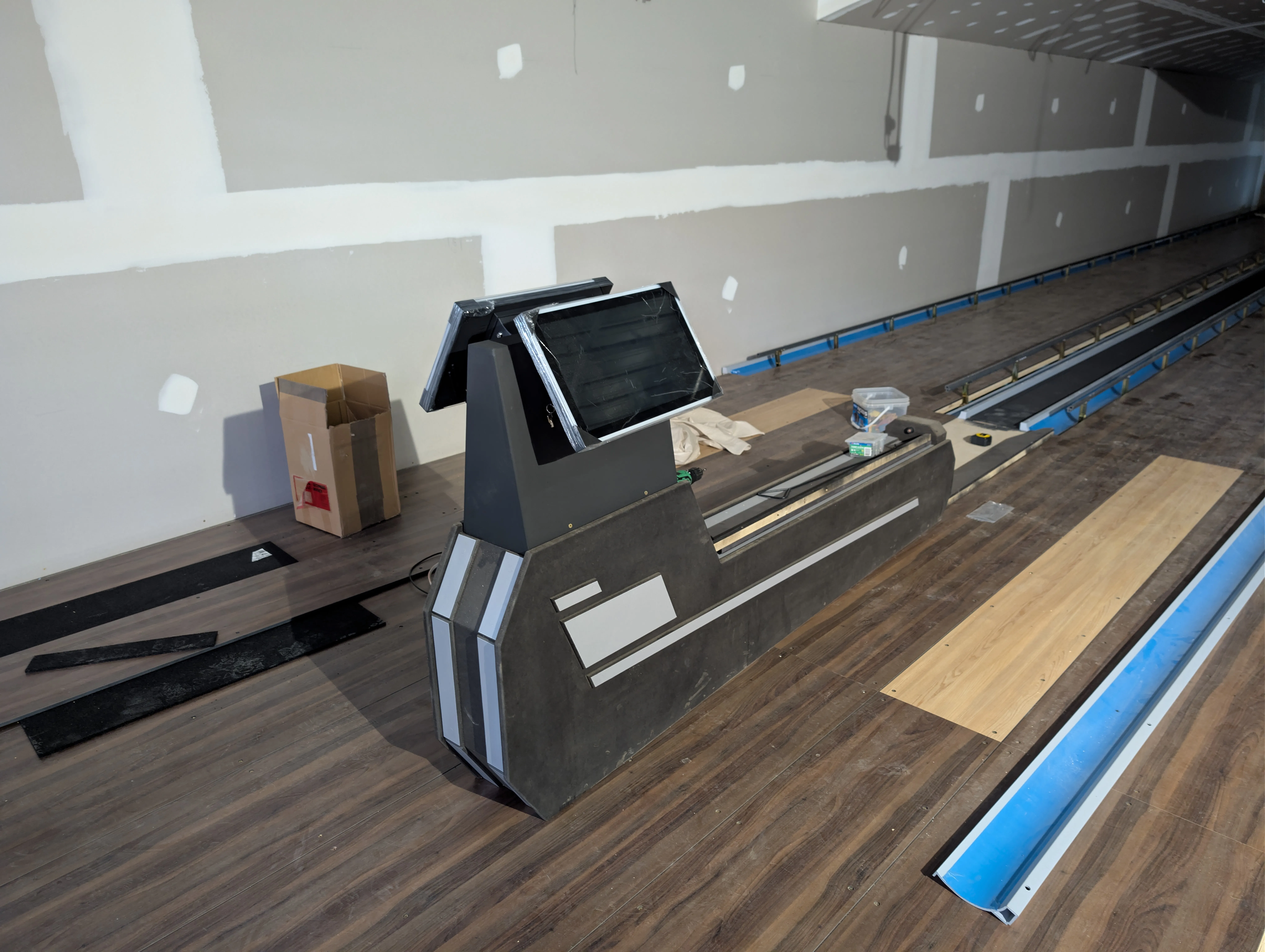
3. Installation and calibration. On-site installation takes approximately three weeks. Subfloor, lane surface, pinsetters, scoring console, and software are all installed, calibrated, and tested before handover.
4. Ongoing support. Software updates, maintenance guidance, and technical support continue after installation. Your lane keeps improving over time.
The earlier we are involved in a new build, the cleaner the integration. For renovations and retrofits, we assess your existing space and work within its constraints.
What It Costs
Every installation is different, so we do not publish a single price. The cost depends on the lane format, the number of lanes, the space preparation required, and the level of fit-out.
As a general guide, a residential bowling installation sits alongside a high-end home theatre or a modest swimming pool in terms of investment. Our architects and builders page includes indicative starting prices for single and double-lane systems.
A swimming pool has its own appeal (cooling off on a hot day, exercise, a place to gather) but the pool itself does not change. A bowling lane with LaneCraft software keeps improving: new game modes, new features, and new ways to play arrive through regular updates. The investment appreciates rather than sitting still.
Common Mistakes
A few things we have seen go wrong on projects, or that homeowners wish they had thought about earlier:
- Not involving us early enough. Slab set-downs, electrical circuits, and data runs are cheap to add at drawing stage and expensive to retrofit.
- Underestimating ceiling height. 2.1m above the lane is the minimum. If your space is tight, check this before committing to anything else.
- Skipping acoustic treatment. If the bowling space shares walls with bedrooms or living areas, basic insulation in those walls makes a significant difference.
- Choosing format based on space alone. Kern fits more spaces, but if you have 26 metres and you are a serious Tenpin bowler, regulation lanes might be worth it. Talk to us before deciding.
Next Steps
If you are at the early thinking stage, get in touch and tell us about your space. We can cover feasibility, lane format, and what the build process would look like for your property.
If you are already working with an architect or builder, point them to our architects and builders guide for technical specifications and coordination timelines.
Related: How much does a home bowling alley cost? | How big is a bowling lane? | Our software | Home bowling service | See our projects | Browse all game modes