Ninepin Bowling in Australia: Format Guide
Ninepin bowling has deep European roots and a small but dedicated following in Australia. Here is the history of the format, how it differs from Tenpin, and why it is a compelling choice for private installations.
A Different Kind of Bowling
Most Australians have bowled Tenpin. Ten pins arranged in a triangle, heavy balls with finger holes, bowling shoes, gutters on either side. It is the format that dominates commercially, and for most people it is the only version of bowling they have ever tried.
Ninepin bowling is something else entirely. It has been played competitively in Europe for centuries, particularly in Germany and across German-speaking communities, where it is taken seriously enough to have dedicated clubs, national competitions, and a governing body. The format came to Australia with German immigrants in the nineteenth century, and in a handful of communities it has never stopped being played.
The Tanunda Kegel Club
One of Australia’s most remarkable Ninepin bowling institutions sits in Tanunda, in the heart of the Barossa Valley in South Australia. The Tanunda Kegel Club has been operating for well over 100 years, making it one of the oldest continuously running bowling clubs in the country. Its lanes are among the few remaining traditional Ninepin installations in Australia, and the club still runs regular competition alongside social play.
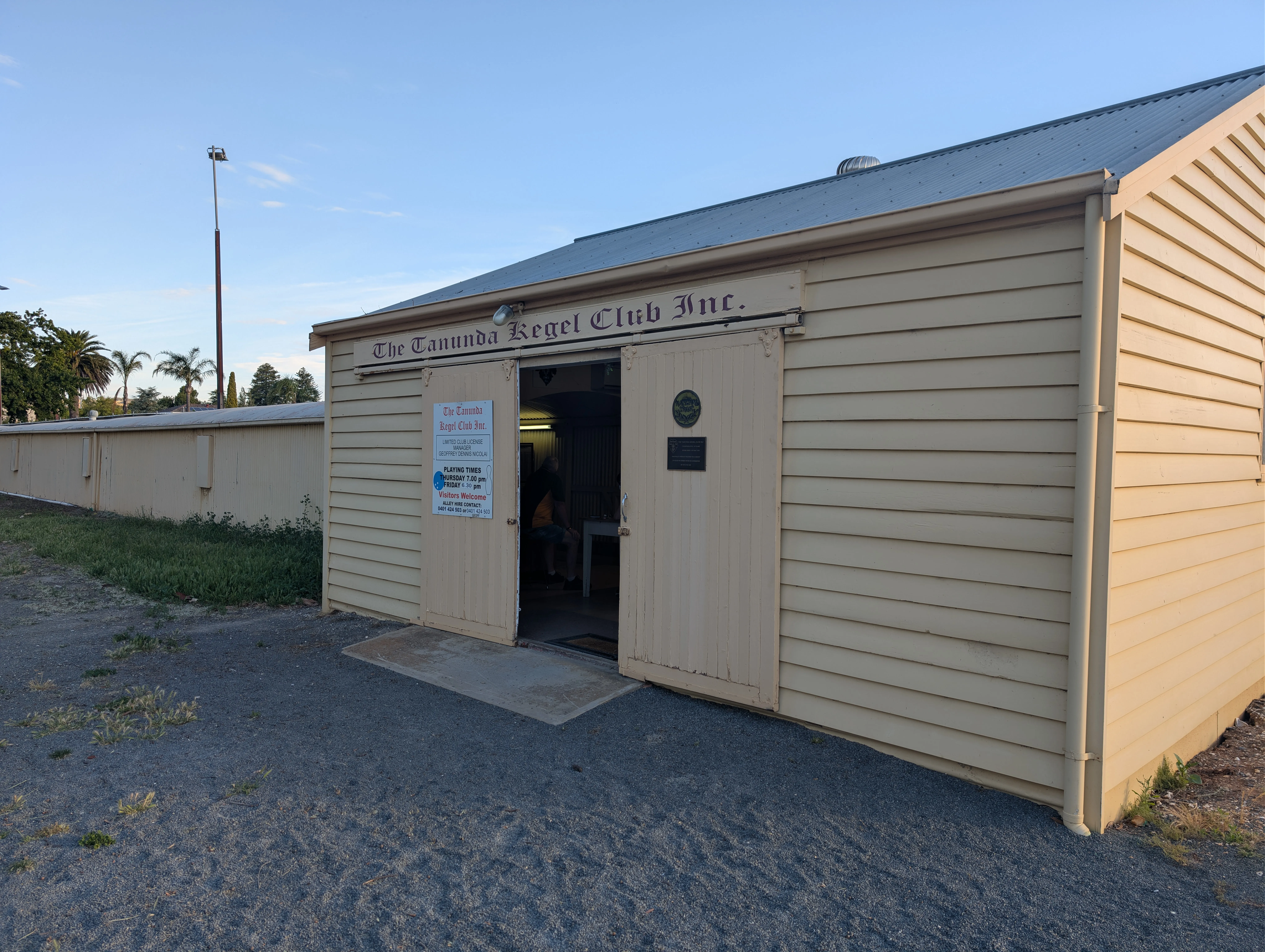
The Barossa Valley’s strong German heritage, established by Silesian Lutheran immigrants in the 1840s, explains why the format took root and held on in this region when it faded elsewhere in Australia. “Kegel” is the German word for bowling pin, and the sport is called “Kegeln” in German: it is the same game, with the same equipment and rules, played in community clubs across Germany today.
The Lanes
Walking into the Tanunda Kegel Club is a step back into the original form of the game. The lanes are entirely unlike anything in a modern bowling centre.
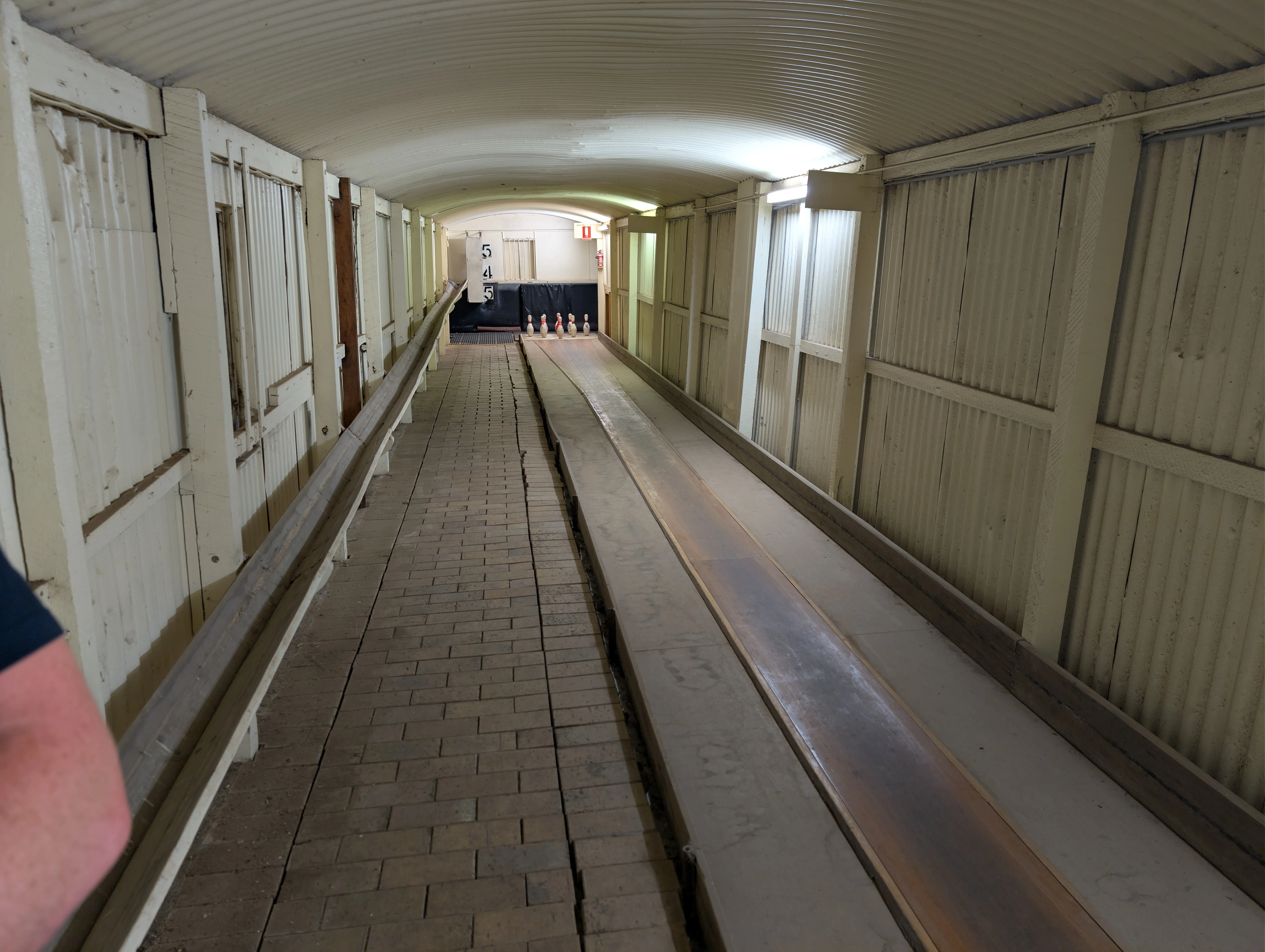
Each playing surface is a Bohlenbahn (literally “plank lane” - “Bohle” meaning a thick timber board, “Bahn” meaning lane). It is nothing like a Tenpin lane: no polished synthetic surface, no gutters, no approach markers. Just a weathered timber board, roughly 35 centimetres wide with a slight cup across its width, stretching toward nine pins at the far end.
How you play it: The cupped surface is the game. You bowl with rhythm, not power - the ball rocks from side to side along the plank, and the skill is timing it so the ball arrives at the pins from an angle. Get the rhythm wrong and the ball falls off the plank into the gutter, or goes straight through the middle and only clips a few pins.
The pins are set by hand after every delivery. A club member sits at the far end, re-spots each pin to its position, and gives the signal when ready. It is a slower, more social game than anything automated could produce, and that rhythm is part of what makes it special.
Scoring is kept on a traditional chalk blackboard. Points accumulate over a set number of throws, not frame by frame. The club has its own house rules and scoring conventions that have been passed down through generations of members, distinct enough from standard European Ninepin that we are working to add a dedicated Tanunda game mode to our software. Stay tuned.
The 100-Year-Old Wooden Ball
The Tanunda Kegel Club still has wooden balls in play. We were invited to bowl with one during our visit: a dark, dense sphere worn smooth by what must be a century of hands and lane contact, with hairline cracks running across the grain and no finger holes of any kind.
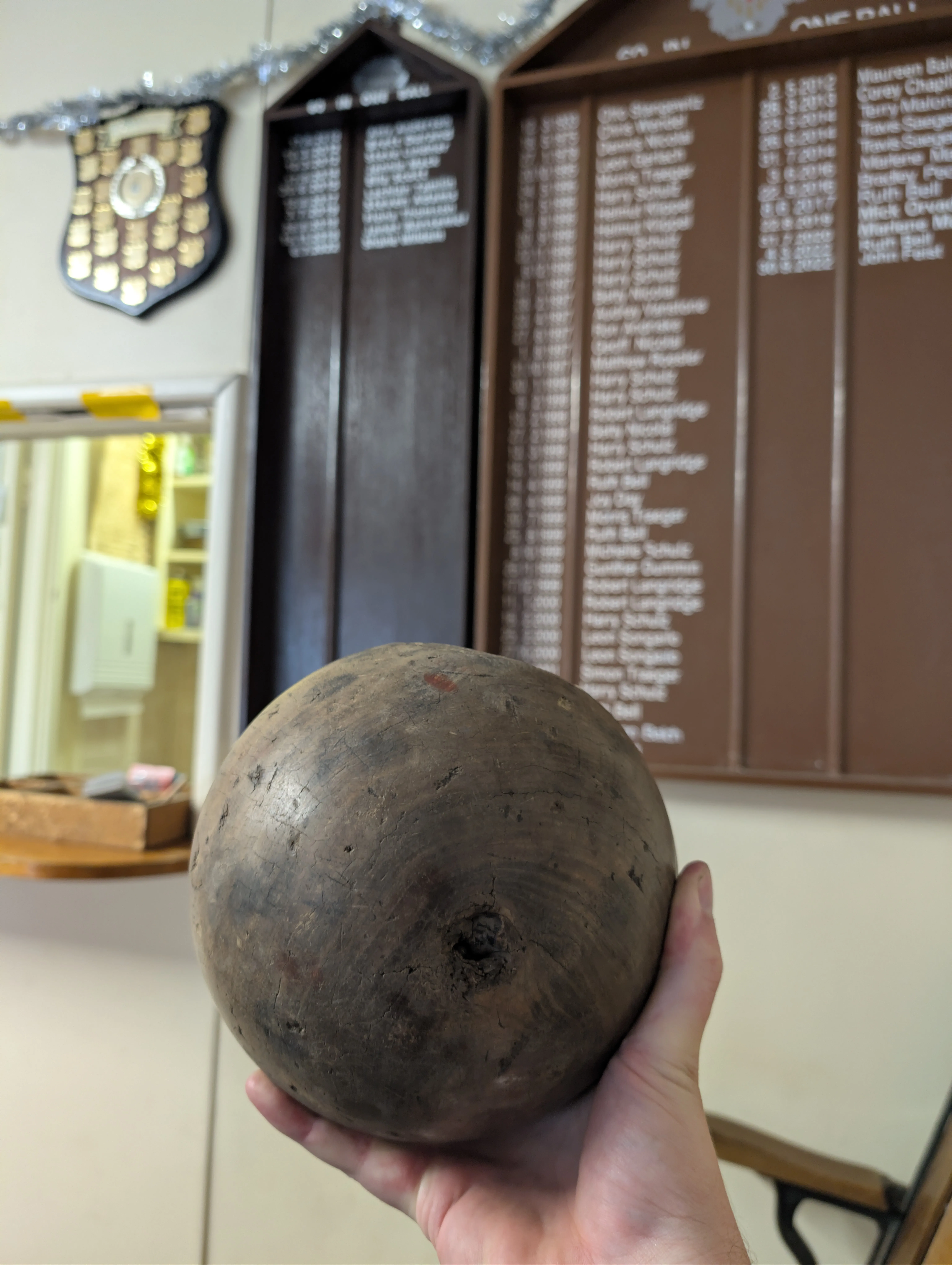
Holding it tells you everything you need to know about how the format evolved. It is solid in a way modern composite balls are not, with a weight that sits entirely in the palm. You grip the whole ball and swing it forward, no wrist mechanics, no finger release technique. It is bowling reduced to its purest physical act.
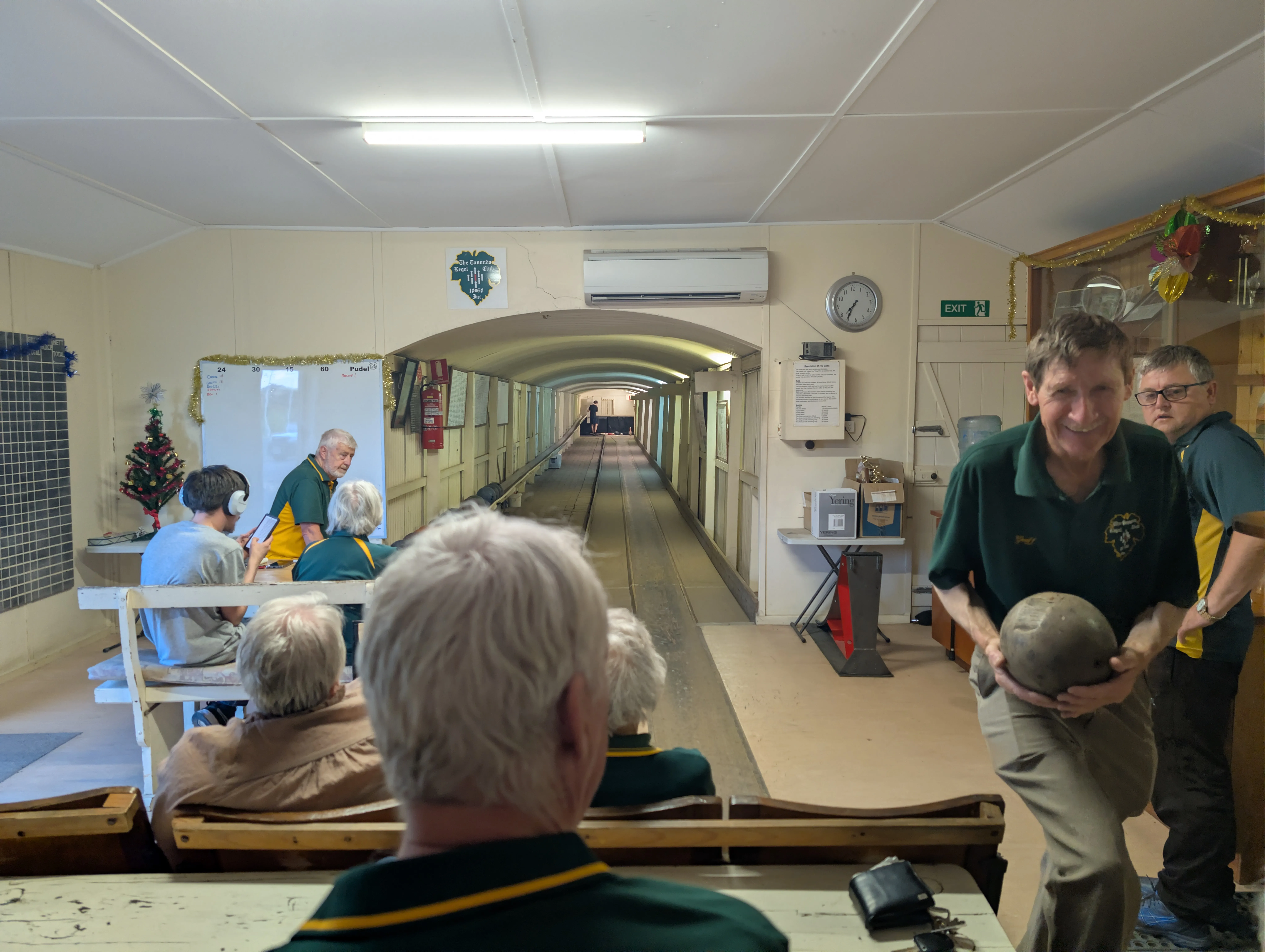
Modern Ninepin balls are made from composite materials and weigh around 2.8kg, but the principle is the same: no finger holes, same weight for everyone, no specialised technique required. The 100-year-old wooden ball is a direct ancestor of the balls we use in every LaneCraft Ninepin installation today.
The History on the Wall
The club’s display cabinet holds antique wooden pins, early photographs, and the original membership roll of the Tanunda Skittle Club, the name the club carried before it became the Kegel Club.
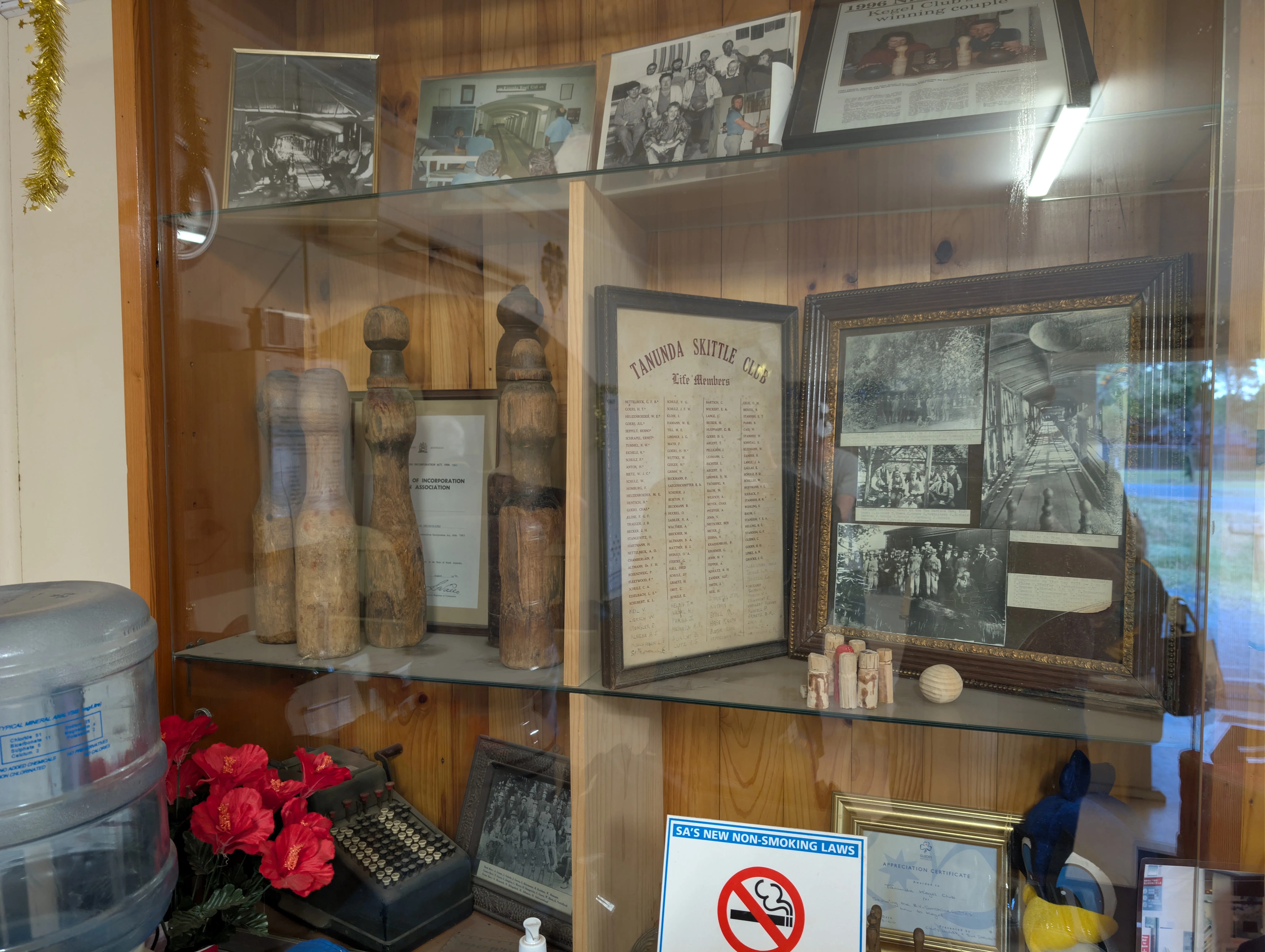
Those pins are visibly different from anything in a modern installation: taller, thinner, turned from solid timber, with a different taper than the squat plastic pins used in contemporary Ninepin. Seeing them next to the modern equipment makes the evolution of the format tangible.
The photographs show the club in earlier decades, teams in period dress, the same building, the same lanes. The Barossa communities that founded the club in the early twentieth century would recognise the building and the game if they walked in today.
How Ninepin Differs from Tenpin
The pin layout is the most obvious difference. Tenpin uses ten pins in a triangular formation, four rows deep (1-2-3-4 from front to back). Ninepin uses nine pins in a diamond shape (a 3×3 square rotated 45 degrees), with the 9th pin at the centre.
This changes everything about how you approach each shot. In Tenpin, the strategy is to hit the pocket at the right angle to generate a chain reaction through a tightly packed triangle. In Ninepin, the pins are spaced further apart, and the ball is smaller: small enough to thread between pins and exit the pack without touching them all. Chain reactions are far less common. A Ninepin strike, clearing all nine with a single ball, is a genuine event even among experienced players. A perfect game may never have been officially recorded.
That difficulty makes Ninepin more interesting to watch than its low profile might suggest. Every delivery has real suspense. Games stay competitive across different skill levels because no one is consistently clearing the rack. And the geometry opens up a much richer design space for game modes: scoring rules built around which specific pins you hit, combinations that reward precision over power, formats that simply would not work if strikes were routine.
The balls reinforce the accessibility side of this. Tenpin balls weigh between 2.7kg and 7.3kg and have finger holes drilled for individual grip. Ninepin balls have none: you grip them with your whole hand, all balls are the same weight, and no bowling shoes are required. The format removes every barrier to casual play from the first visit, while simultaneously being harder to master than it looks.
Ninepin at LaneCraft
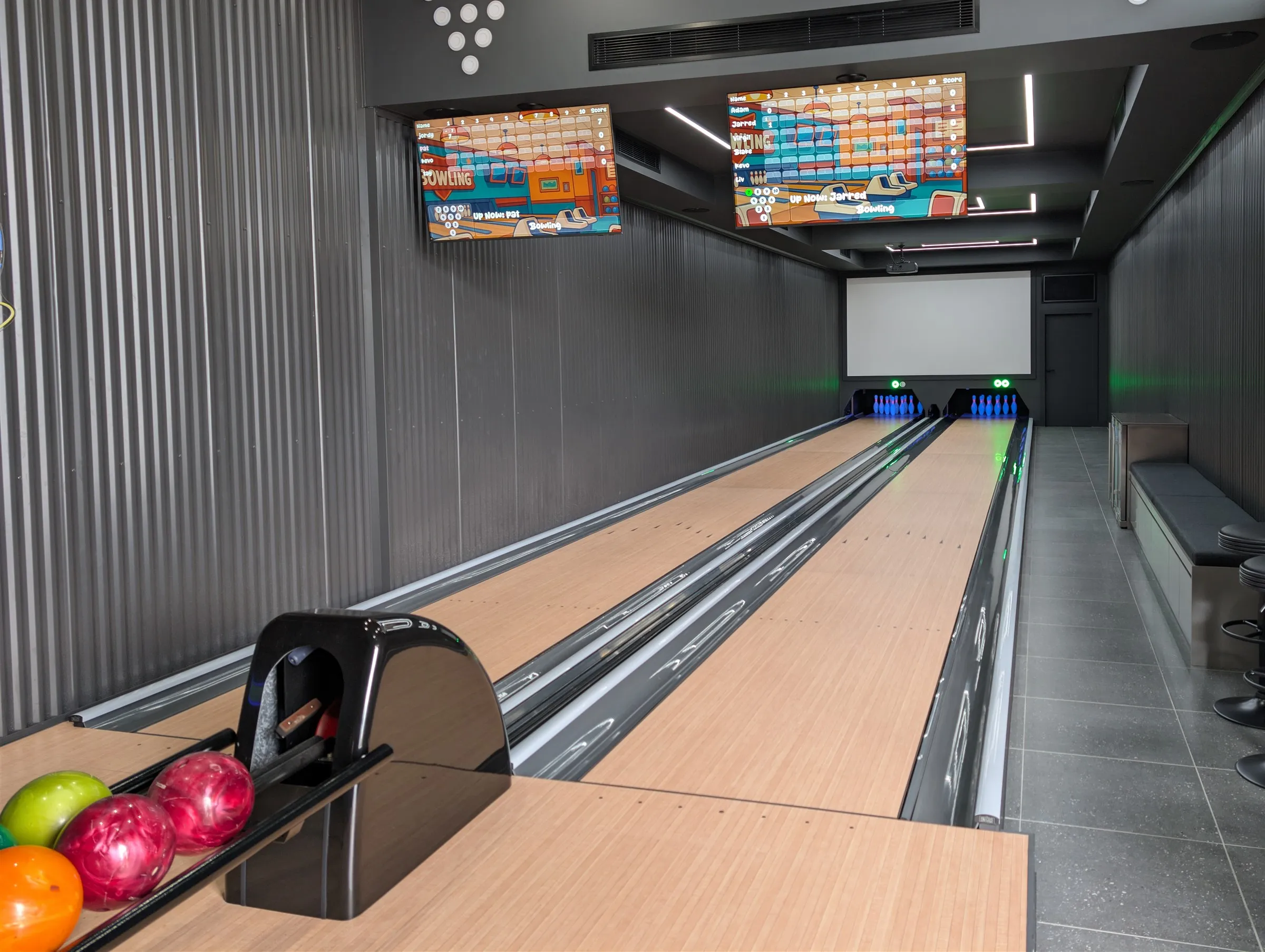
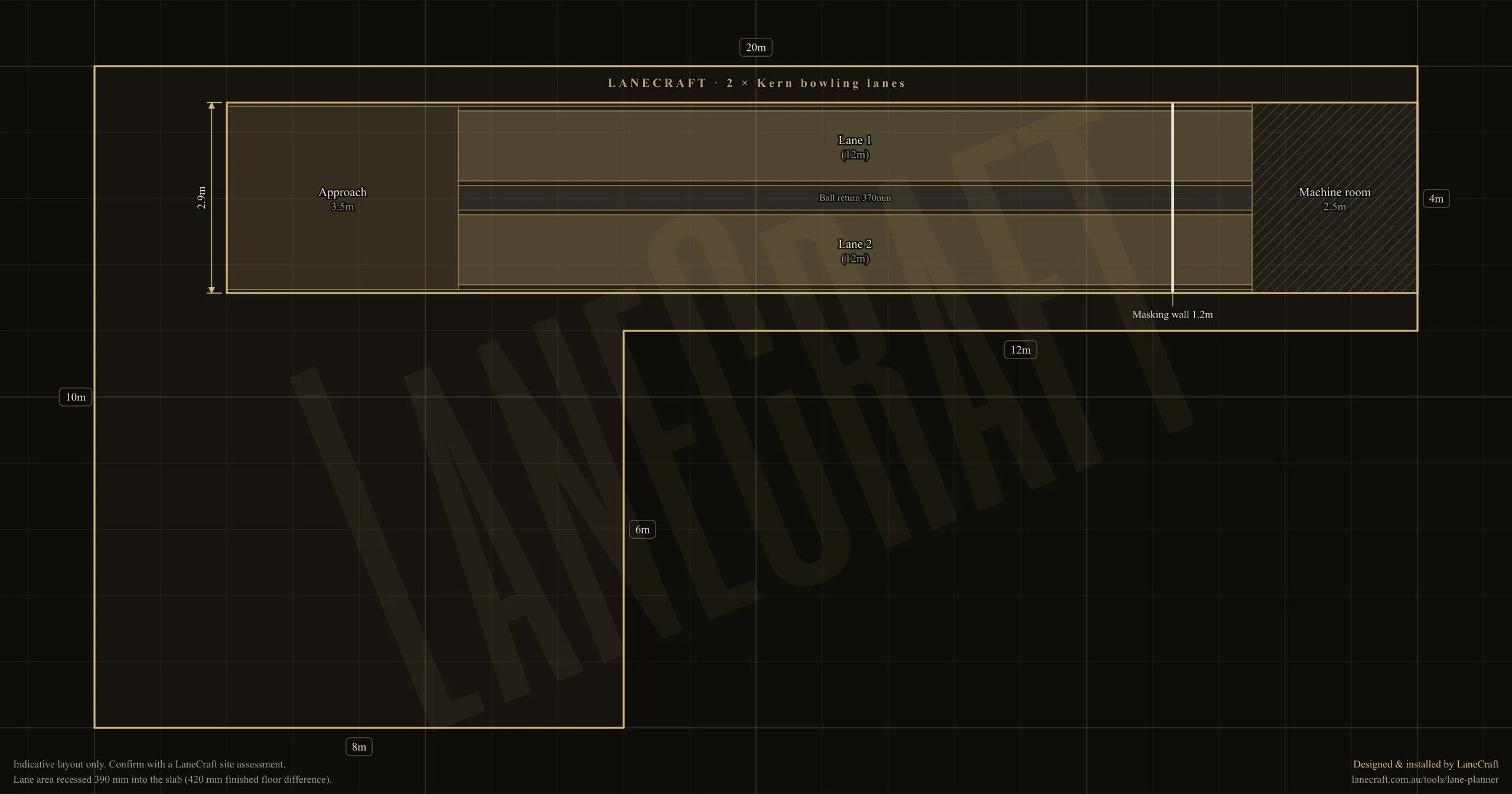
LaneCraft installs Ninepin lanes for private homes and venues across Australia. We also install our KERN format: a compact Tenpin-configuration lane using lightweight, same-weight Kern Balls with no gutters and no bowling shoes required.
For serious Ninepin players, or homeowners with a connection to the format through European heritage or competition history, a dedicated Ninepin installation provides the full traditional experience: the diamond pin layout, the Ninepin ball, and game modes built around how the format is actually played.
Our software includes game modes designed specifically for Ninepin, including International (based on the official Kegeln competition rules), Stina (a three-centre-pin format that only works on Ninepin layouts), No 3s, Canadian Duck, and others. These are modes built around Ninepin geometry and scoring logic. See the full game mode library for what is available.
For homeowners who want the accessibility of Ninepin-style play but the familiar 10-pin visual, our Kern format is typically the better fit. Kern uses Kern Balls on a Tenpin-configuration lane, giving you the ease-of-play benefits without requiring guests to learn an unfamiliar pin layout.
Which Format Is Right for Your Home?
There are genuine reasons to choose any of the three formats LaneCraft installs.
Ninepin rewards curiosity and suits anyone who wants something genuinely different. The smaller, lighter balls (traditionally with no finger holes) mean anyone can bowl from the first visit without sizing or technique. The diamond layout with its centre pin produces the widest variety of game modes of any format: scoring systems built around specific pins and precision that simply cannot exist in Tenpin. Strikes are rare even among experienced players, every delivery has real tension, and games stay competitive across skill levels throughout. In Australia, it is also almost entirely unseen as a private installation, which makes it a genuine conversation piece.
KERN is LaneCraft’s own compact lane format, combining the best of Tenpin and Ninepin. The name comes from the German word for core. The familiar Tenpin arrangement, lightweight same-weight Kern Balls, no gutters, no bowling shoes required. A compact game that still feels big. It runs the broadest game mode library of any LaneCraft installation, with the only exclusions being Ninepin-specific formats that depend on the diamond layout.
Tenpin is the format most guests already know. The familiarity is a genuine advantage: no explanation required, the competitive angle is immediately understood, and for anyone who wants to practise or play at a serious level, nothing else replicates the regulation experience.
All three are real choices with real strengths. Get in touch and we will give you an honest recommendation based on your space and how the lane will be used.
The State of the Game in Australia
Outside of a handful of dedicated clubs like Tanunda, Ninepin bowling has almost no footprint in Australia. Tenpin has dominated since commercial bowling centres arrived in the mid-twentieth century. Most Australians have never seen a Ninepin pin layout in person.
The Tanunda Kegel Club is proof that the format works in this country, and that a community can form around it and sustain it for over a century. The lanes, the wooden balls, the hand-set pins, the chalk scoreboard: none of it has been replaced because none of it needs to be. It works, and it has worked for generations.
For private homes, the question is simpler: does the format suit the space, the owner, and the way the lane will be used? If you are ready to start planning, contact us and we will walk you through the options.
Related: What you need to know before building a home bowling lane | International: the Kegeln competition format | Explore all game modes | Home bowling service